Researchain Logo Researchain
  • Decentralized Journals

    A

    Archives
  • Avatar
    Welcome to Researchain!
    Feedback Center
Decentralized Journals
A
Archives Updated
Archive Your Research
Computation and Language

"I don't believe in word senses"

Adam Kilgarriff

Abstract
Word sense disambiguation assumes word senses. Within the lexicography and linguistics literature, they are known to be very slippery entities. The paper looks at problems with existing accounts of `word sense' and describes the various kinds of ways in which a word's meaning can deviate from its core meaning. An analysis is presented in which word senses are abstractions from clusters of corpus citations, in accordance with current lexicographic practice. The corpus citations, not the word senses, are the basic objects in the ontology. The corpus citations will be clustered into senses according to the purposes of whoever or whatever does the clustering. In the absence of such purposes, word senses do not exist. Word sense disambiguation also needs a set of word senses to disambiguate between. In most recent work, the set has been taken from a general-purpose lexical resource, with the assumption that the lexical resource describes the word senses of English/French/..., between which NLP applications will need to disambiguate. The implication of the paper is, by contrast, that word senses exist only relative to a task.
Full PDF
Related Researches

Some Ontological Principles for Designing Upper Level Lexical Resources
by Nicola Guarino
A Comparison of WordNet and Roget's Taxonomy for Measuring Semantic Similarity
by Michael Mc Hale
Towards an implementable dependency grammar
by Timo Jarvinen
Parallel Strands: A Preliminary Investigation into Mining the Web for Bilingual Text
by Philip Resnik
Indexing with WordNet synsets can improve Text Retrieval
by Julio Gonzalo
An Empirical Evaluation of Probabilistic Lexicalized Tree Insertion Grammars
by Rebecca Hwa
A Variant of Earley Parsing
by Mark-Jan Nederhof
Segregatory Coordination and Ellipsis in Text Generation
by James Shaw
Spotting Prosodic Boundaries in Continuous Speech in French
by V. Pagel
Error-Driven Pruning of Treebank Grammars for Base Noun Phrase Identification
by Claire Cardie
Separating Surface Order and Syntactic Relations in a Dependency Grammar
by Norbert Broeker
Partial Evaluation for Efficient Access to Inheritance Lexicons
by Sven Hartrumpf
Primitive Part-of-Speech Tagging using Word Length and Sentential Structure
by Simon Cozens
Letter to Sound Rules for Accented Lexicon Compression
by V. Pagel
How to define a context-free backbone for DGs: Implementing a DG in the LFG formalism
by Norbert Broeker
Deriving the Predicate-Argument Structure for a Free Word Order Language
by Cem Bozsahin
Some Properties of Preposition and Subordinate Conjunction Attachments
by Alexander S. Yeh
Isometric Lineation in English Texts: An Empirical and Mathematical Examination of its Character and Consequences
by Hideaki Aoyama
Combining Expression and Content in Domains for Dialog Managers
by Bernd Ludwig
Word Length Frequency and Distribution in English: Observations, Theory, and Implications for the Construction of Verse Lines
by Hideaki Aoyama
Evaluating a Focus-Based Approach to Anaphora Resolution
by Saliha Azzam
Improving Data Driven Wordclass Tagging by System Combination
by Hans van Halteren
Character design for soccer commmentary
by Kim Binsted
Statistical Models for Unsupervised Prepositional Phrase Attachment
by Adwait Ratnaparkhi
Automatically Creating Bilingual Lexicons for Machine Translation from Bilingual Text
by Davide Turcato

  • «
  • 1
  • 2
  • 3
  • 4
  • »
Submitted on 23 Dec 1997 Updated

arXiv.org Original Source
NASA ADS
Google Scholar
Semantic Scholar
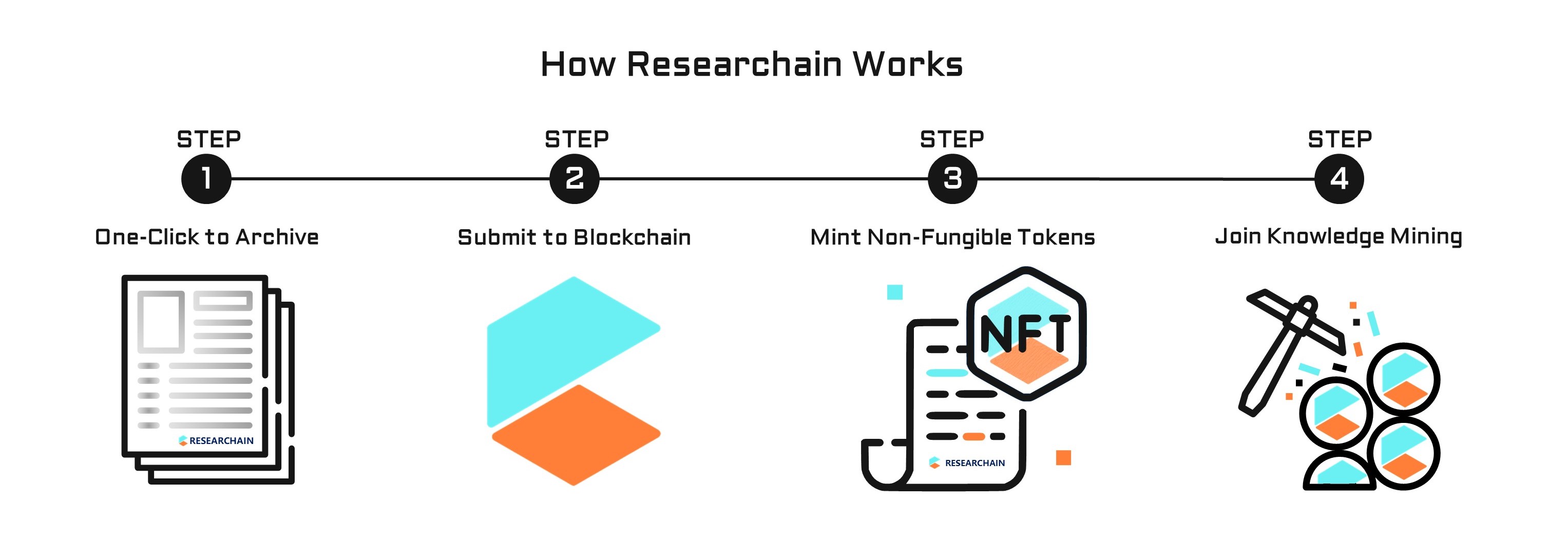
How Researchain Works
Researchain Logo
Decentralizing Knowledge