Researchain Logo Researchain
  • Decentralized Journals

    A

    Archives
  • Avatar
    Welcome to Researchain!
    Feedback Center
Decentralized Journals
A
Archives Updated
Archive Your Research
Astrophysics

The 2MASS-selected Flat Galaxy Catalog

S.N. Mitronova,  I.D. Karachentsev,  V.E. Karachentseva,  T.H. Jarrett,  Yu.N. Kudrya

Abstract
An all-sky catalog of 18020 disc-like galaxies is presented. The galaxies are selected from the Extended Source Catalog of the Two Micron All-Sky Survey (XSC 2MASS) basing on their 2MASS axial ratio a/b >= 3. The Catalog contains data on magnitudes of a galaxy in the J, H, K_s bands, its axial ratio, positional angle, index of luminosity concentration, as well as identification of the galaxy with the LEDA and the NED databases. Unlike the available optical catalogs, the new 2MFGC catalog seems to be more suitable to study cosmic streaming on a scale of z <= 0.1. The dipole moment of distribution of the bright (K < 11 mag) 2MFGC objects (l = 227 degr, b = 41 degr or SGL = 90 degr, SGB = -43 degr) lies within statistical errors (+/- 15 degr) in the direction of the IRAS dipole and the optical RFGC dipole.
Full PDF
Related Researches

It's Cloud's Illusions I Recall: Mixing Drives the Acceleration of Clouds from Ram Pressure Stripped Galaxies
by Stephanie Tonnesen
Searching for Low-mass Population III Stars Disguised as White Dwarfs
by Vedant Chandra
One-parametric description for scalar field dark matter potentials
by Francisco X. Linares Cedeño
Unveiling the traits of massive young stellar objects through a multi-scale survey
by A. J. Frost
The VST Early-type GAlaxy Survey (VEGAS) data release 1
by E. Iodice
Revisiting the complex kinematics of ionized gas at the central region of NGC 1068: evidence of an additional active galactic nucleus?
by Jaejin Shin
Detecting neutrino mass by combining matter clustering, halos, and voids
by Adrian E. Bayer
Nucleosynthesis signatures of neutrino-driven winds from proto-neutron stars: a perspective from chemical evolution models
by Fiorenzo Vincenzo
Multi-scale view of star formation in IRAS 21078+5211: From clump fragmentation to disk wind
by L. Moscadelli
Rotational spectroscopic study and astronomical search for propiolamide in Sgr B2(N)
by E. R. Alonso
Nitrogen Dioxide Pollution as a Signature of Extraterrestrial Technology
by Ravi Kopparapu
The active region source of a type III radio storm observed by Parker Solar Probe during Encounter 2
by L. Harra
A Machine Learning Approach to Measuring the Quenched Fraction of Low-Mass Satellites Beyond the Local Group
by Devontae C. Baxter
BALRoGO: Bayesian Astrometric Likelihood Recovery of Galactic Objects -- Global properties of over one hundred globular clusters with Gaia EDR3
by Eduardo Vitral
A Deep Learning Approach for Characterizing Major Galaxy Mergers
by Skanda Koppula
Dissecting the Energy Budget of a Gamma-Ray Burst Fireball
by Bing Zhang
Geometrical constraints on curvature from galaxy-lensing cross-correlations
by Yufei Zhang
Dark Matter Microhalos From Simplified Models
by Nikita Blinov
Measuring anisotropic stress with relativistic effects
by Daniel Sobral-Blanco
Pair Lines of Sight Observations of Multiphase Gas Bearing O VI in a Galaxy Environment
by Pratyush Anshul
WIYN Open Cluster Study LXXXV. Li in NGC 2243 -- Implications for Stellar and Galactic Evolution
by B. J. Anthony-Twarog
Energetic Electron Distribution of the Coronal Acceleration Region: First results from Joint Microwave and Hard X-ray Imaging Spectroscopy
by Bin Chen
HI constraints from the cross-correlation of eBOSS galaxies and Green Bank Telescope intensity maps
by Laura Wolz
Synergies between low- and intermediate-redshift galaxy populations revealed with unsupervised machine learning
by Sebastian Turner
A broad-band X-ray view of the precessing accretion disk and pre-eclipse dip in the pulsar Her X-1 with NuSTAR and XMM-Newton
by McKinley C. Brumback

  • «
  • 1
  • 2
  • 3
  • 4
  • »
Submitted on 13 Aug 2004 (v1), last revised 16 Aug 2004 (this version, v2) Updated

arXiv.org Original Source
INSPIRE HEP
NASA ADS
Google Scholar
Semantic Scholar
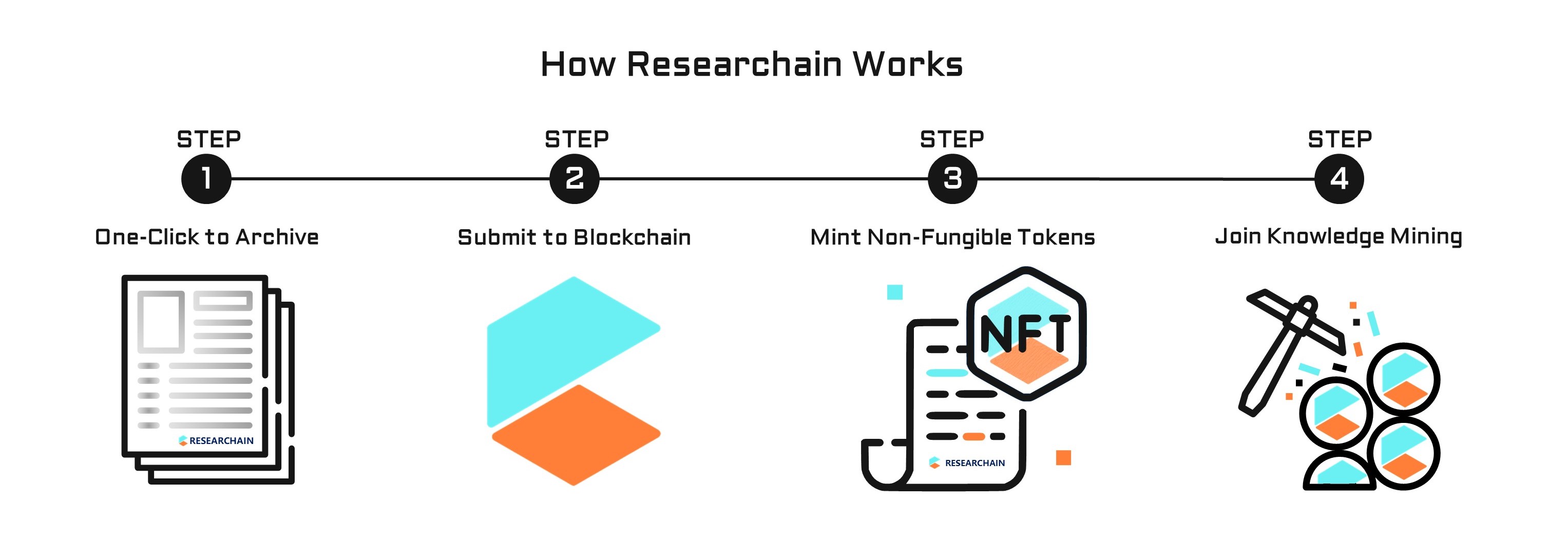
How Researchain Works
Researchain Logo
Decentralizing Knowledge